


Can PPF Be Installed Over Repainted or Repaired Car Panels?
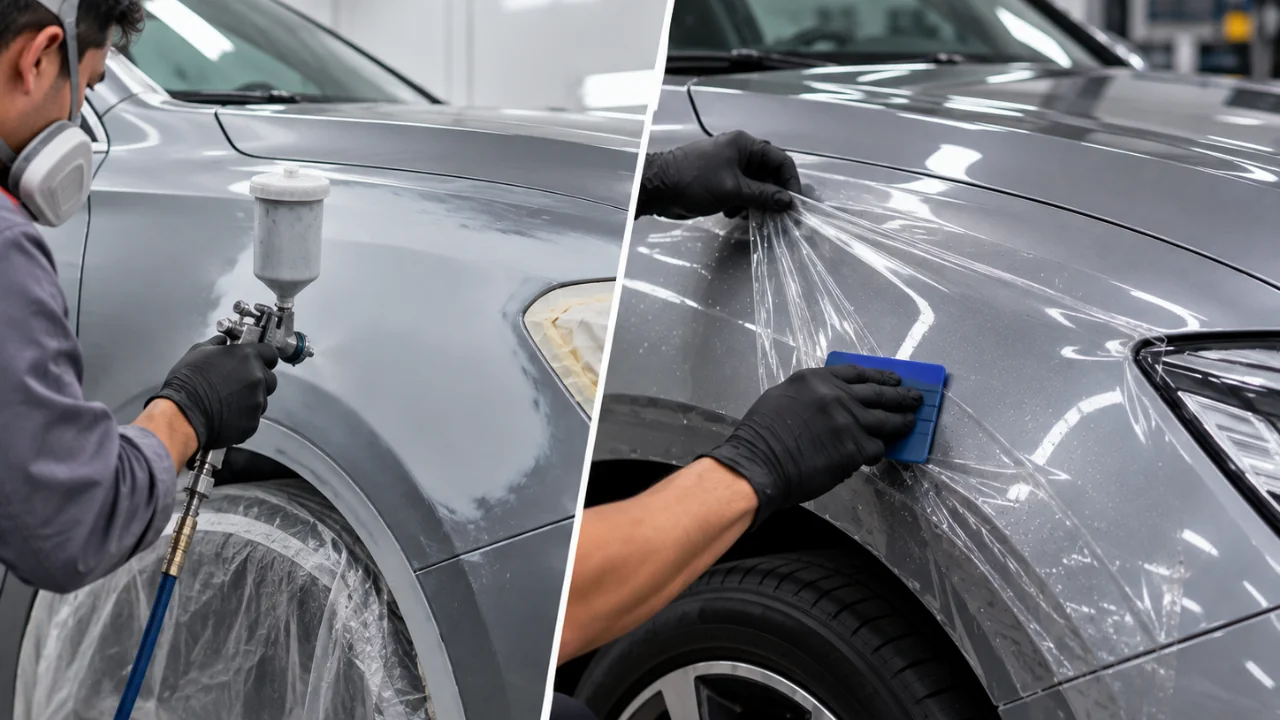
Applying PPF on repainted car panels is possible, provided the paint is fully cured, properly bonded, and free from surface defects. Unlike factory paint, a repaired or repainted panel depends heavily on the quality of the body repair, paint system, and curing process. Applying paint protection film too soon can affect adhesion and create problems later during film removal.
A repainted panel is not automatically unsuitable for PPF. The condition and stability of the paint matter more than its repair history.
Let us look at what needs to be checked before installing PPF over repaired or repainted surfaces.
Is Repainted Car Paint Suitable for PPF?
Whether PPF can be applied on repainted panels depends mainly on the condition of the paint. A properly repaired and cured surface can generally accept PPF, while weak or poorly finished paint can create complications.
Before applying PPF over repaired car panels, the surface should have:
- Fully cured paint and clear coat
- Strong paint adhesion
- A smooth, clean finish
- No exposed primer or loose paint
- No significant paint defects
The repair history should also be disclosed before installation. A professional inspection can help determine whether the panel is ready for adhesive film.
How Long Should Repainted Car Paint Cure Before PPF?
Fresh automotive paint continues to cure after it leaves the spray booth. During paint curing, solvents and gases may continue to escape through outgassing.
Installing PPF after repainting before this process is complete can interfere with film adhesion. It may also contribute to bubbling, cloudiness, or other finish issues. The required curing period varies according to the paint system, application method, temperature, and body shop process.
There is no single waiting period that applies to every repair. The body shop or paint manufacturer’s recommendation should take priority before PPF over fresh paint is considered.
Factory Paint vs Repainted Panels: Key Differences for PPF
Factory paint and repaired paint can behave differently when paint protection film on repainted car surfaces is being considered. Here are the key differences to keep in mind.
| Factor | Factory Paint | Repainted/Repaired Panel |
| Paint consistency | Highly controlled | Depends on repair quality |
| Curing | Factory-cured | Requires post-repair curing |
| Adhesion stability | More predictable | Can vary |
| Surface finish | Usually consistent | May have repair defects |
| Removal risk | Generally lower | Higher if paint adhesion is weak |
| PPF suitability | Usually straightforward | Requires inspection |
| Warranty | Standard terms may apply | Coverage may vary |
A quality aftermarket paint finish can be suitable for PPF, although its condition and bonding should be verified first. Established names such as Global Hi-Tech Films reflect the growing focus on quality paint protection film solutions, where the condition of the underlying paint remains an important consideration.
Which Paint Defects Should Be Fixed Before PPF Installation?
Transparent film does not make poor paintwork disappear. Any defect underneath can remain visible after installation and may affect the finished appearance.
Before installing PPF after paint repair, check for:
- Sanding marks
- Dust nibs
- Orange-peel texture
- Uneven clear coat
- Paint edges from blending
- Chips or exposed primer
- Poorly bonded paint
Any visible defects need attention before the film goes on. The smoother the paint surface, the better the film will sit and adhere.
Can Removing PPF Damage Repainted Car Panels?
The main concern with removing PPF from repainted panels is the condition of the underlying paint. If the repaint has weak adhesion, removing the film may pull up paint or separate the clear coat.
A panel with previous body repair, poor priming, or incomplete curing can be more prone to problems. Older repairs may also respond differently than factory paint.
The way the film is removed also matters. Using the right heat and pulling the film carefully helps protect the paint. Repainted and repaired panels need extra care during removal.
What Should You Check Before Applying PPF Over Repainted Panels?
A few checks can help establish whether a repaired panel is ready for film installation. Especially for PPF on body shop repair areas, the installer should pay close attention to the following points:
- When the panel was repainted
- Whether paint curing is complete
- The condition of the paint and clear coat
- Whether visible defects are present
- The quality of previous body repair
- Whether the surface has adequate paint thickness
- Any potential warranty coverage limitations
The installer should know about the panel’s repaint history. Keeping the repair and PPF records can help if warranty questions come up later. PPF warranty on repainted paint may differ from coverage for factory paint, depending on the film manufacturer and installer.
Is It Safe to Apply PPF Over Repainted Car Panels?
PPF on aftermarket paint is possible when the repaired surface has had enough time to cure, and the paint is firmly bonded. A repaint alone does not rule out PPF; the quality of the repair and the condition of the paint are more important.
Poor adhesion, paint defects, or applying the film too soon can cause issues during installation or removal. A professional inspection can help spot these problems early.
Before installing PPF over a repaired panel, make sure the paint is fully cured, well bonded, and ready for adhesive film.
FAQs About Applying PPF Over Repainted Car Panels
- Can PPF be applied over repainted car panels?
Yes. PPF can be installed over repainted panels once the paint is fully cured and properly bonded. - How long should I wait after repainting before installing PPF?
The required time depends on the paint system and repair process. The body shop or paint manufacturer should provide the appropriate curing guidance. - Can PPF damage repainted car paint during removal?
It may, especially when the repaint has poor bonding. Removing the film carefully is important. - Will PPF hide imperfections in repaired paint?
No. Sanding marks, uneven paint, exposed primer, and similar defects will still show through the film. - Is factory paint safer for PPF than repainted paint?
Factory paint tends to have more consistent adhesion. Repainted surfaces can also work well when the repair and paintwork are done properly. - Does PPF warranty cover repainted panels?
Warranty terms vary by manufacturer and installer. Repainted or repaired panels may have different warranty coverage, so the terms should be checked before installation.


 English
 German
 Spanish
 French
 Arabic
 Chinese
 Turkish
 Russian